Wildlife Facts 2026
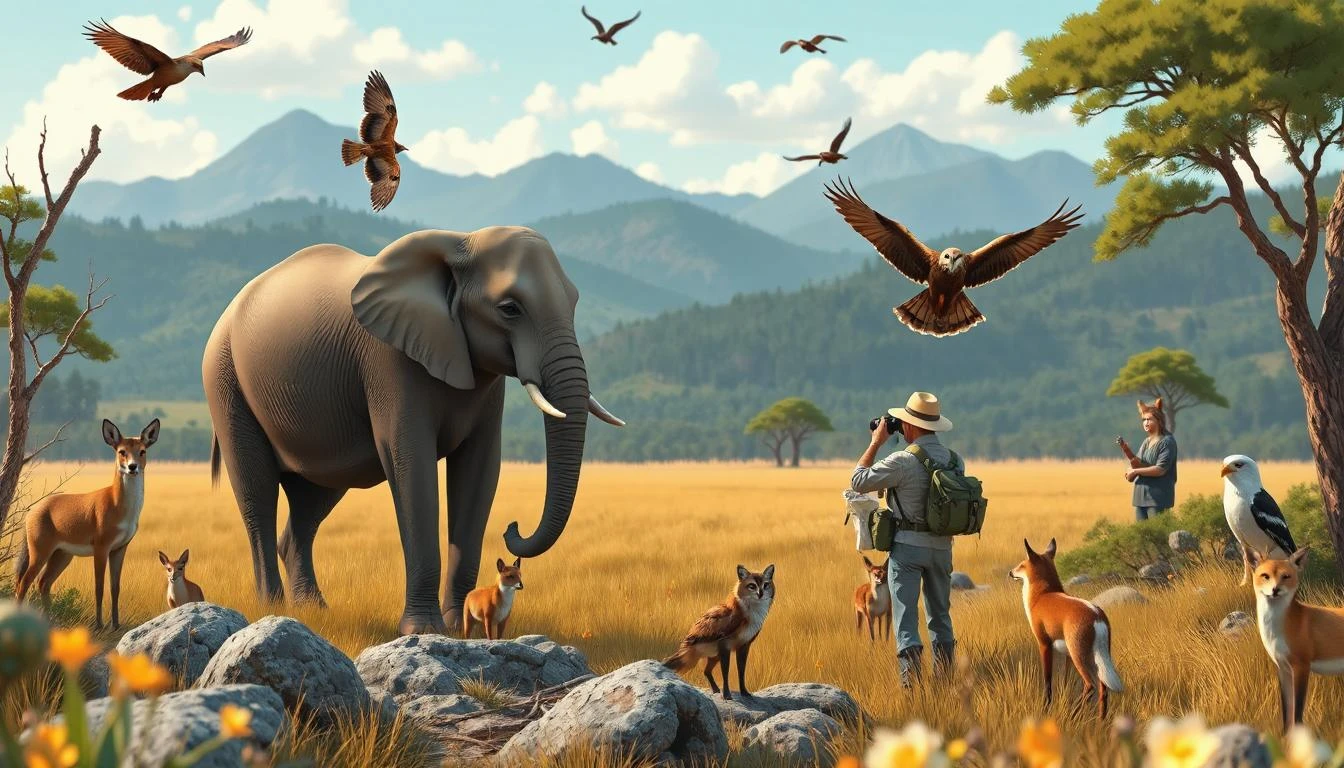
Have you ever wondered how many incredible wildlife discoveries happen every year without making global headlines? Across forests, oceans, deserts, and mountains, scientists continue uncovering remarkable stories that change our understanding of nature. More importantly, these discoveries are becoming valuable learning resources that strengthen environmental education around the world. If you enjoy exploring fascinating facts while understanding why they matter, you're about to discover information that is both engaging and surprisingly relevant to everyday life.
Nature continues to reveal extraordinary secrets, and the latest Wildlife Facts updates prove that there is still so much left to learn. From newly identified species and groundbreaking animal behavior studies to innovative conservation technologies, these discoveries are shaping global education, scientific research, and biodiversity protection. As the famous naturalist Sir David Attenborough said, "No one will protect what they don't care about, and no one will care about what they have never experienced." His words remind us that knowledge is often the first step toward protecting our planet.
Latest Discoveries in Wildlife Science 2026
Every year brings new reasons to look at nature with fresh curiosity. Recent scientific breakthroughs continue to expand what we know about the natural world, while Wildlife Facts animals provide educators, researchers, and curious readers with inspiring examples of adaptation, resilience, and biodiversity. These discoveries are not only fascinating but also help answer questions many people are actively searching for today.
New species identification updates
Advanced DNA sequencing, environmental DNA (eDNA), satellite mapping, and artificial intelligence have accelerated the discovery of new species throughout 2026. Researchers continue identifying previously unknown amphibians, insects, marine organisms, reptiles, and mammals in regions that were once considered thoroughly explored.
These discoveries also improve our understanding of biodiversity, ecosystem balance, genetic diversity, and environmental sustainability. They remind us that protecting habitats remains essential because countless species may still exist beyond the reach of current scientific knowledge.
Animal behavior research breakthroughs
Animal behavior research has become one of the most exciting fields in modern biology. Scientists have documented complex communication, cooperative hunting, emotional responses, problem-solving abilities, and even cultural learning among several wildlife species.
These findings enrich environmental education by helping students understand evolution, ecology, and adaptation through real scientific observations rather than simple textbook examples.
Habitat restoration progress worldwide
Around the world, habitat restoration projects are producing encouraging results. Forest regeneration, coral reef restoration, wetland recovery, and mangrove rehabilitation are allowing ecosystems to recover while creating safer environments for wildlife.
Research also suggests that healthy ecosystems recover biodiversity more quickly when local communities actively participate in conservation efforts, making education an important part of long-term environmental success.
Wildlife Conservation Efforts Around the World
Protecting wildlife has become a global responsibility that combines science, education, technology, and community involvement. Instead of reacting only when species become endangered, conservation efforts increasingly focus on preventing biodiversity loss before it reaches a critical stage.
Endangered species protection programs
International conservation programs continue improving breeding success, habitat protection, scientific monitoring, and wildlife rehabilitation. These coordinated efforts have helped stabilize populations of several endangered species while increasing public awareness through educational campaigns.
As renowned primatologist Dr. Jane Goodall explained, "What you do makes a difference, and you have to decide what kind of difference you want to make." Her perspective continues inspiring conservation initiatives across the globe.
National park expansion initiatives
Many countries continue expanding national parks and protected landscapes to safeguard biodiversity hotspots while supporting scientific research, ecotourism, and environmental education.
Larger protected areas improve ecological connectivity, reduce habitat fragmentation, and provide wildlife with greater opportunities to thrive naturally.
Anti-poaching technology advancements
Artificial intelligence, drones, GPS tracking, satellite monitoring, thermal imaging, and predictive analytics are transforming wildlife protection. Conservation teams can now detect illegal activities faster, monitor endangered animals more accurately, and allocate resources more efficiently than ever before.
Fascinating Wildlife Facts You Should Know
The more we explore wildlife, the more surprising nature becomes. Many remarkable adaptations developed over millions of years continue challenging long-held scientific assumptions, proving that evolution is far more creative than most people imagine.
Rare animal survival adaptations
Some frogs survive freezing temperatures by naturally protecting their cells, while octopuses instantly camouflage themselves using specialized skin cells. Arctic animals conserve energy with extraordinary physiological adaptations, and migratory birds navigate thousands of kilometers by sensing Earth's magnetic field.
These remarkable survival strategies demonstrate how evolution continually shapes life under changing environmental conditions.
Unique ecosystems and biodiversity hotspots
Tropical rainforests, coral reefs, cloud forests, mangrove ecosystems, and polar environments each support unique combinations of plants and animals found nowhere else on Earth.
Protecting these biodiversity hotspots benefits wildlife while also preserving freshwater resources, climate stability, food security, and ecological resilience for future generations.
Human impact on wildlife evolution
Urbanization, climate change, pollution, and habitat fragmentation are influencing wildlife in unexpected ways. Some species have altered migration patterns, feeding behaviors, and communication methods to adapt to environments increasingly shaped by human activity.
These evolutionary responses demonstrate both the resilience of nature and the responsibility humans share in protecting ecological balance.
Explore and Protect Wildlife for the Future
Every wildlife discovery carries an important lesson beyond science itself. It reminds us that learning never truly ends and that education remains one of the most powerful conservation tools available. When knowledge is shared across generations, curiosity becomes action, and action creates lasting protection for biodiversity.
As you continue exploring the natural world, remember that even small moments of curiosity can inspire meaningful change. Every new discovery deepens our understanding of life on Earth and strengthens our commitment to protecting it for future generations. The story of wildlife is still being written, and perhaps the next extraordinary chapter will begin with a question that you choose to ask today.